





High-Performance Cooling Fans for AI Robotics | Role of Cooling Fans in Intelligent Computing & Joint Drive Systems
In the era of exploding AI compute power and the march toward general-purpose robotics, the thermal density of equipment is rising exponentially. Whether it's AI training servers, edge inference devices, or joint actuators of humanoid robots, cooling efficiency directly determines computing stability, equipment lifespan, and motion precision. As a professional thermal solution manufacturer, CoolCox Limited has launched a series of high-performance cooling fans and modules specifically for the AI robotics industry, helping intelligent systems stay cool and operate continuously. Below is a brief analysis of the role of cooling fans in the core components of AI robotics.
I. Concept and Characteristics of Cooling Fans for AI Robotics
Cooling fans for AI robotics refer to active cooling devices specifically designed for AI computing equipment (GPU servers, AI accelerators), robot control systems (controllers, drivers), and actuators (joint motors, embedded computers). Common forms include:
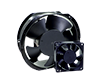
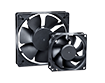
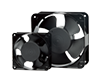
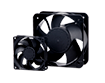
DC Axial Fan: For general cooling of server racks and power supplies
DC Blower Fan: For localized, high-backpressure cooling in narrow air ducts (e.g., AI inference cards)
DC Frameless Fan: For extremely space-constrained interiors of robot joints
Cooling Module: Integrated air/liquid cooling modules for high-power AI processors
GPU Cooler: Dedicated to AI training/inference GPU cards
Their core characteristics are: high static pressure / high airflow, PWM intelligent speed control, long life (dual ball bearings), low noise, and EMI compatibility, meeting the 24/7 continuous operation requirements of AI equipment.
II. Technical Principle of Cooling Fans for AI Robotics
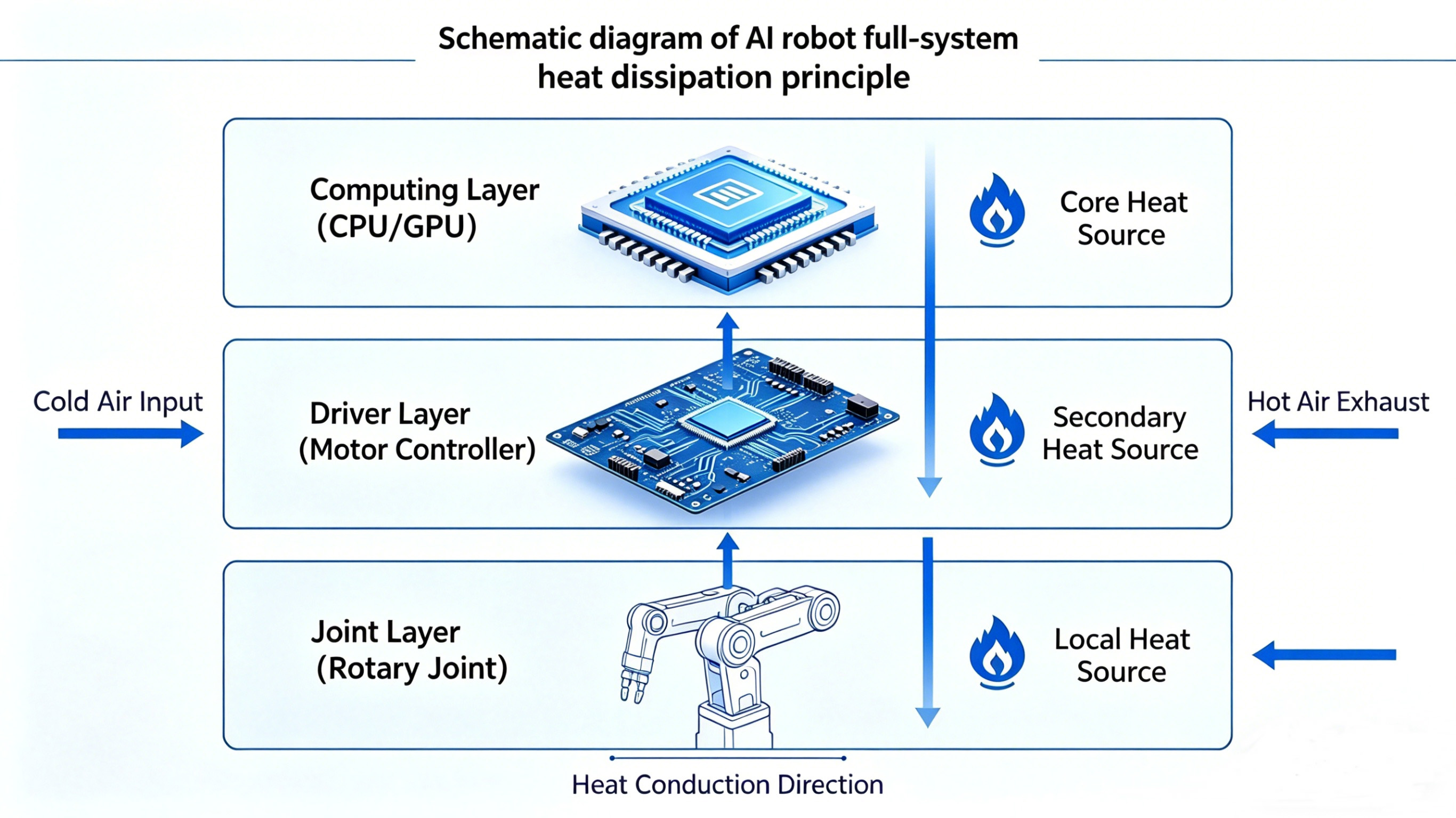
In AI robotic systems, cooling fans adopt a stratified cooling architecture based on heat source distribution:
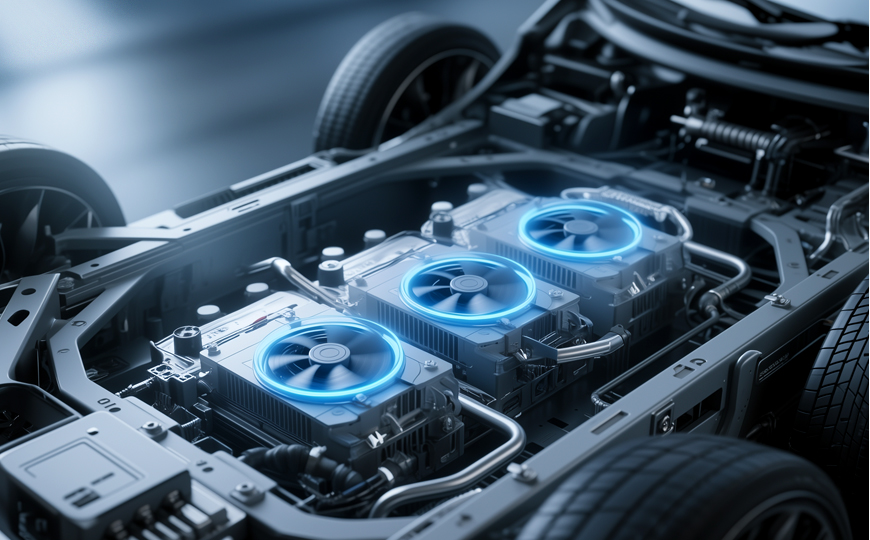
Compute Layer Cooling: In AI servers/edge devices, cooling fans or modules are mounted directly on GPUs, AI accelerators, or CPU coolers, transferring heat from
the chip surface to the system air duct or heat exchanger via forced air cooling.
Drive Layer Cooling: Robot joint servo drivers and power MOSFETs typically use DC Blower Fans for localized forced convection, quickly dissipating switching losses together with heat sinks.
System Layer Environmental Control: Whole cabinets use arrays of DC Axial Fans to establish directional front-to-rear airflow, maintaining internal ambient temperature below critical component thresholds.
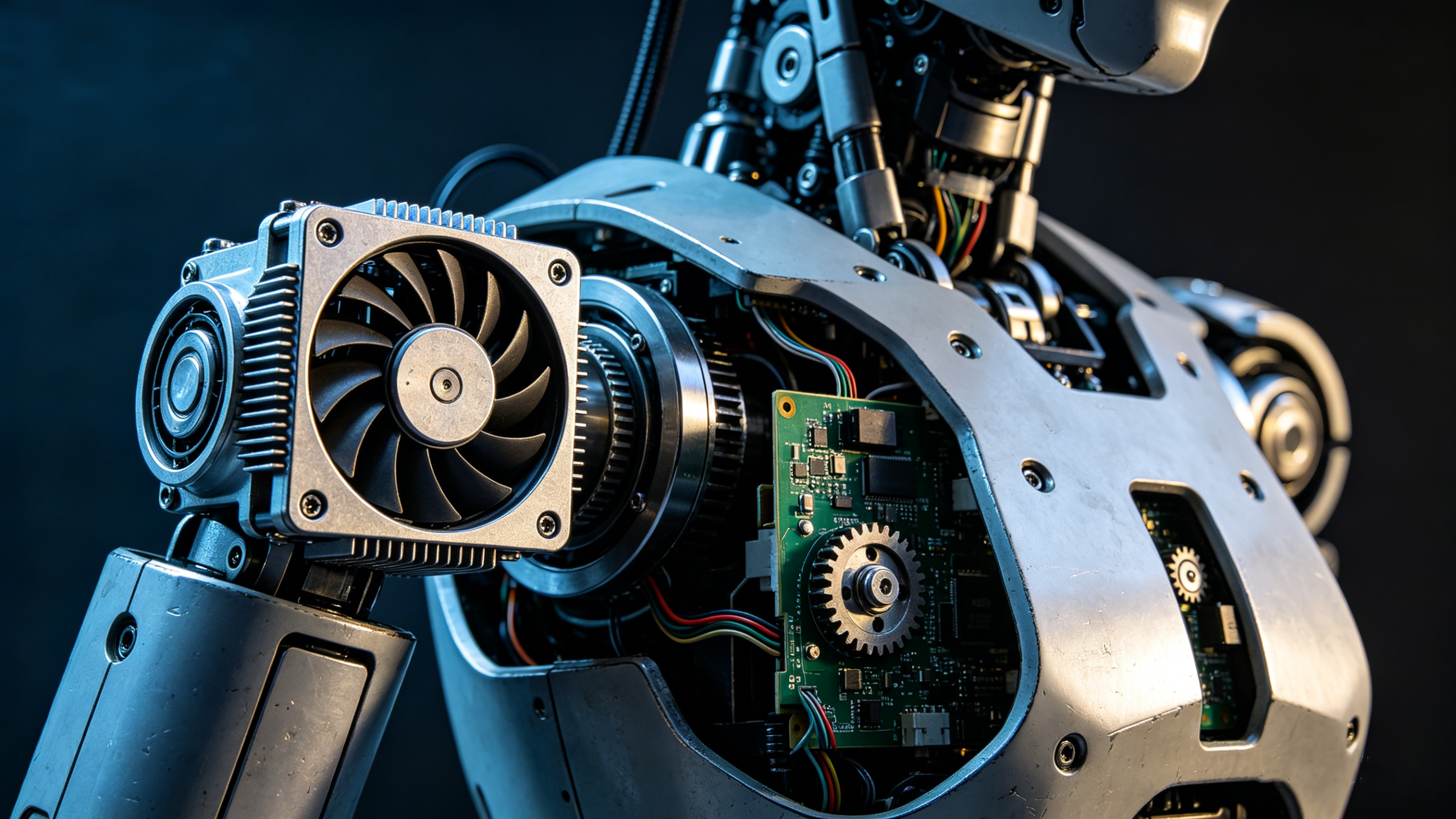
In high-end humanoid robot joints, Frameless Fans are embedded into the stator gap of the motor to provide active cooling without increasing axial length.
III. Core Role of Cooling Fans in Different AI Robotics Scenarios
A. AI Training/Inference Servers
Role: Provide constant, high-density cold air to GPUs/TPUs/NPUs to prevent thermal throttling and ensure full computing power output.
Typical Solution: GPU Cooler (active air cooling) or Cooling Module (heat pipe/vapor chamber + fan combination), with PWM dynamic speed adjustment to balance cooling and noise.
B. Edge AI Devices (Industrial PCs, Autonomous Vehicle Controllers)
Role: Provide reliable cooling in sealed, dusty, or vibrating environments to prevent local hotspots from causing algorithm crashes.
Typical Solution: DC Blower Fans draw air from the side of the device and concentrate airflow onto the main heat-generating chip (e.g., edge computing SoC), using dual ball bearings for vibration resistance.
C. Robot Joint Actuators
Role: High-power-density joint modules (e.g., frameless torque motor + integrated driver) need to dissipate copper loss, iron loss, and MOSFET heat promptly to avoid torque degradation or demagnetization.
Typical Solution: Ultra-thin DC Frameless Fans embedded in the joint housing, or micro DC Axial Fans blowing sideways onto the driver heat sink.
D. Mobile Robot (AGV/AMR) Charging Systems
Role: During high-current charging, the battery management board and charging contacts can overheat – fans ensure charging safety and lifespan.
Typical Solution: DC Axial Fans installed inside the charger, activated by a temperature switch.
IV. Special Requirements of AI Robotics for Cooling Fans & Our Advantages
Compared to traditional electronic devices, AI robotics imposes higher demands on cooling fans:
|
Requirement Dimension |
Specific Metric |
CoolCox Limited Solution Capability |
|
Lifespan & Reliability |
MTBF ≥ 70,000 hours @ 40℃ |
All DC/EC fans available with dual ball bearings; validated through accelerated life testing |
|
Intelligent Speed Control |
Linear speed control based on temperature/PWM |
Support PWM, voltage speed control, FG tachometer, RD alarm; compatible with robot main controllers |
|
Vibration/Shock Resistance |
Compliant with GR-468 or similar |
Dual ball bearing structure resists vibration; frameless fans have no contact wear |
|
EMI Compatibility |
No interference with robot sensors/communication |
Optimized driver board design; magnetic rings or custom filtering available |
|
Compact Integration |
Thickness ≤10mm or custom shapes |
Provide Frameless Fans and custom Cooling Module services |
With over 15 years of cooling fan design experience, our R&D team can conduct joint development with AI robotics customers regarding specific heat source distribution, air duct constraints, and control interfaces. In the pre-sales stage, we provide thermal simulation and prototype testing. In the after-sales stage, we offer on-site technical debugging and assist customers in establishing incoming fan inspection standards.