




Car Seat Ventilation Fan: From Comfort Accessories to Core Components of Smart Cockpits
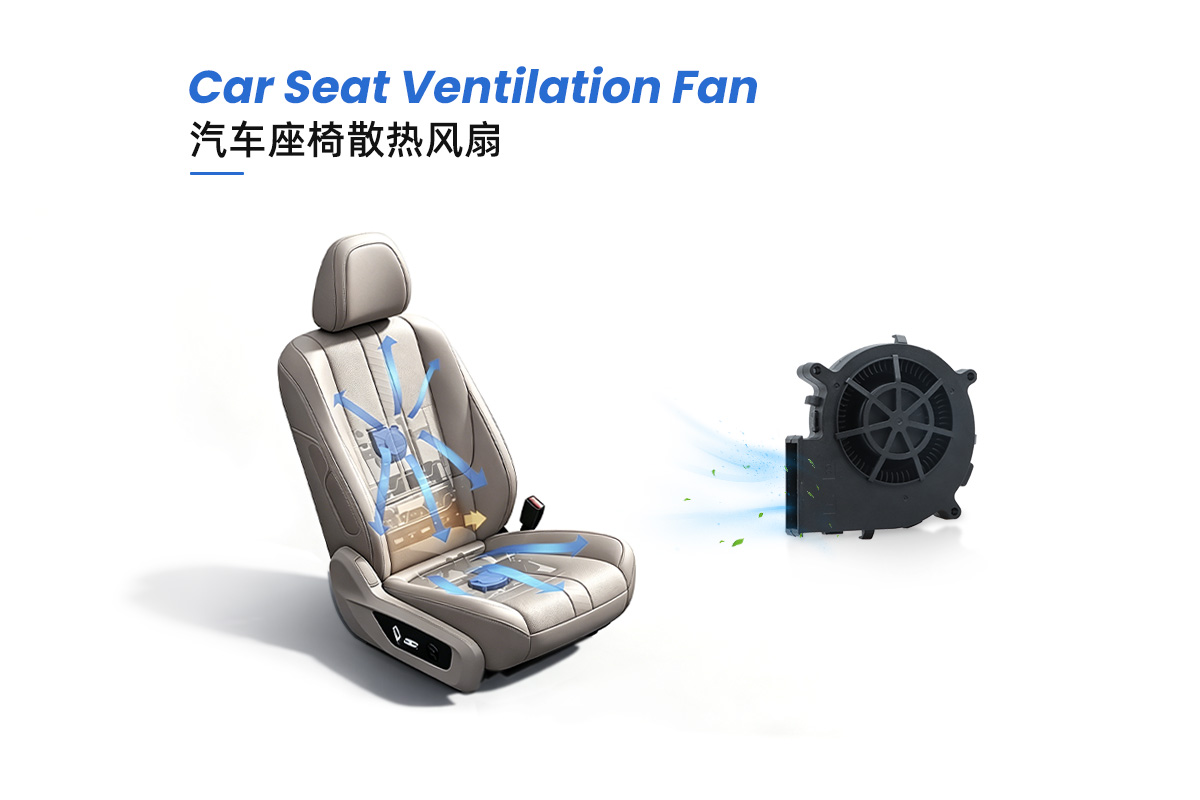
Amid the popularization of new energy vehicles and the upgrade of intelligent cockpits, automotive seat ventilation systems have rapidly expanded from exclusive configurations for luxury cars to mainstream models. As the core component of these systems, seat cooling fans are now facing dual opportunities of technological iteration and market expansion, serving as a key enabler for cockpit thermal management and enhanced riding comfort.
1. Concept and Characteristics of Car Seat Ventilation Fan
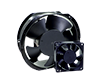
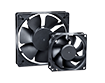
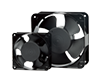
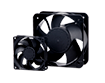
Car Seat Ventilation Fan refer to dedicated cooling components embedded inside car seats, with one or more units typically configured based on seat dimensions and ventilation requirements.
Most are micro blowers or ultra-thin butterfly fans, featuring efficient heat dissipation, eco-friendliness, quiet operation, long service life, stable reliability, and intelligent adaptability.
2. Core Technology: Two-Way Airflow (Blowing/Sucking) — Fans Define the Upper Limit of Experience
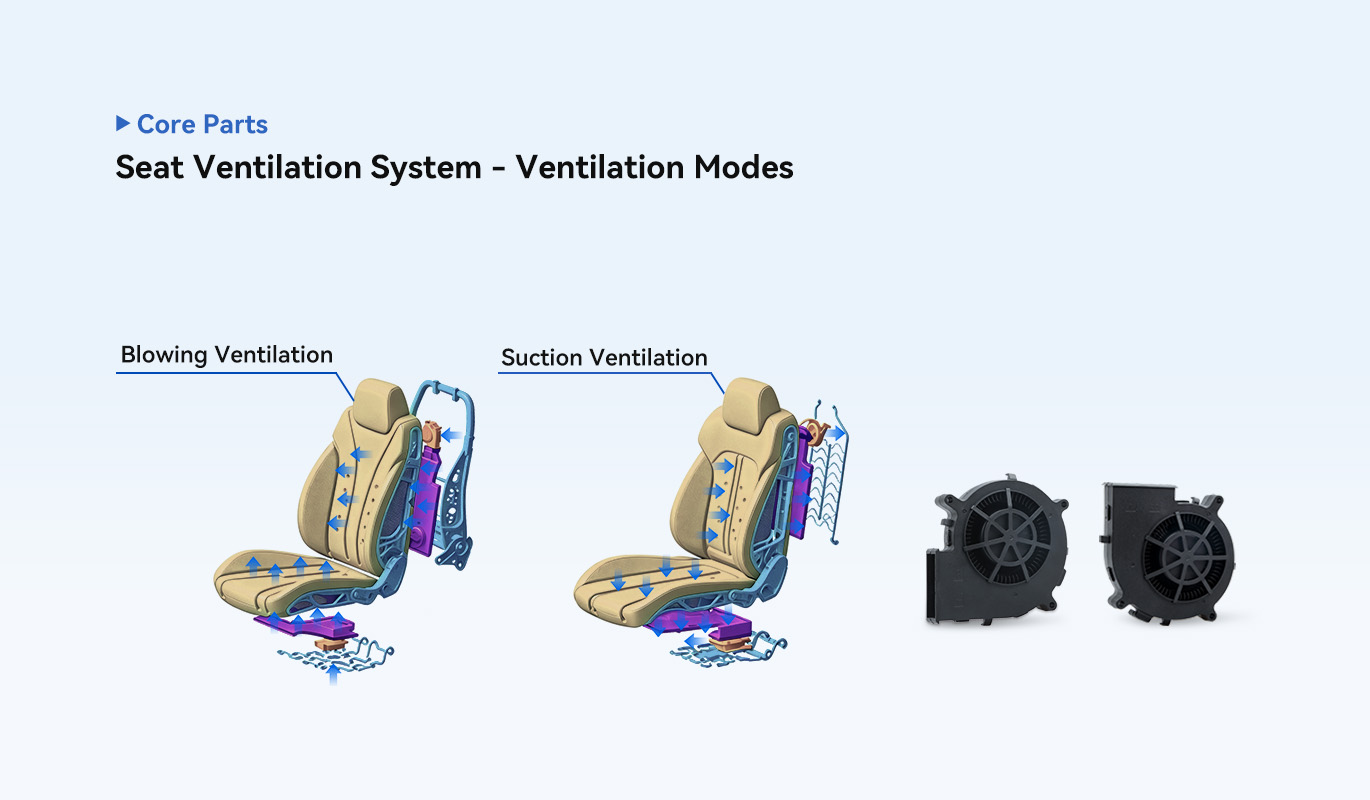
Seat ventilation mainly adopts two modes: blowing and sucking, with cooling fans acting as the core power source for both:
Blowing Ventilation: The fan draws air from under the seat and blows it out through the ventilation layer and seat surface holes. This mode features a simple structure and low cost, but direct airflow on the human body may cause discomfort with prolonged use.
Sucking Ventilation: The fan extracts hot and humid air from the seat surface and discharges it downward. With gentler airflow and more uniform heat dissipation, this mode is more skin-friendly and has become the mainstream solution for mid-to-high-end vehicles.
Technically, fans are installed inside the seat cushion and backrest, guiding airflow into the ventilation layer to penetrate the seat surface. In premium vehicles, they can even connect with the air conditioning system to deliver cool air directly, creating an "air-conditioned seat" experience.
3. Industry Pain Points: Standard Fans Are No Longer a Fit — Customization Is the New Necessity
Standard fans suffer from three major drawbacks in seat applications, driving customization as an industry trend:
Space Constraints: The irregular, narrow cavities inside seats often lead to size and shape mismatches with standard fans, causing rework on brackets, foams, and air ducts, which increases development costs.
Overstated Performance: While airflow meets specifications under no-load conditions, the actual ventilation effect is significantly compromised after installation due to insufficient static pressure against the high resistance of seat materials.
Noise and Vibration: Located close to the human body, ordinary fans tend to generate humming noise and resonance, undermining the quietness of the cockpit.
High-quality seat cooling fans must balance seven core metrics: dimensions, airflow, static pressure, noise level, bearing type, temperature resistance, and electronic control. They should support customized solutions including 5V/12V/24V multi-voltage compatibility and PWM speed regulation, adapt to the -30℃ to 85℃ automotive-grade environment, and meet reliability requirements for long-term vibration and high-low temperature cycling tests.
4. Enterprise Perspective: System Adaptation and Full-Cycle Service Are Core Competitiveness
Leading fan manufacturers have evolved from mere component suppliers to comprehensive solution providers for seat ventilation systems:
Early-stage involvement in seat design to customize products based on installation space, airflow paths, and electrical interfaces, reducing late-stage modifications and shortening validation cycles.
End-to-end technical support, including simulation analysis, structural optimization, electronic control matching, and reliability testing, to ensure stable performance after vehicle integration.
Automotive-grade manufacturing and quality systems to ensure consistent mass delivery, supporting platform-based mass production of vehicles.
If you are evaluating a new seat ventilation system or planning to upgrade an existing design, we recommend choosing a supplier with rich application experience in compact automotive cooling solutions. Take a closer look at COOLCOX’s automotive cooling solutions and partner with us to customize exclusive seat ventilation fans for your next project, precisely matching your core requirements.