






DC / AC / EC Fans: Technical Differences, Pros & Cons, and Selection Reference Table — A Selection Guide for Thermal Engineers
In the fields of electronic equipment, industrial control, new energy, and HVAC systems, axial fans are the most common active cooling components. The three major categories encountered at the beginning of selection are: DC fans, AC fans, and EC fans.
These three types differ significantly in power supply type, control method, energy efficiency, lifespan, and cost. An incorrect choice can lead to excessive noise, failure to meet energy efficiency standards, or reduced reliability. This article systematically compares the key parameters of the three fan types from an engineering application perspective and provides a directly usable selection reference table.
I. Basic Principles and Core Differences
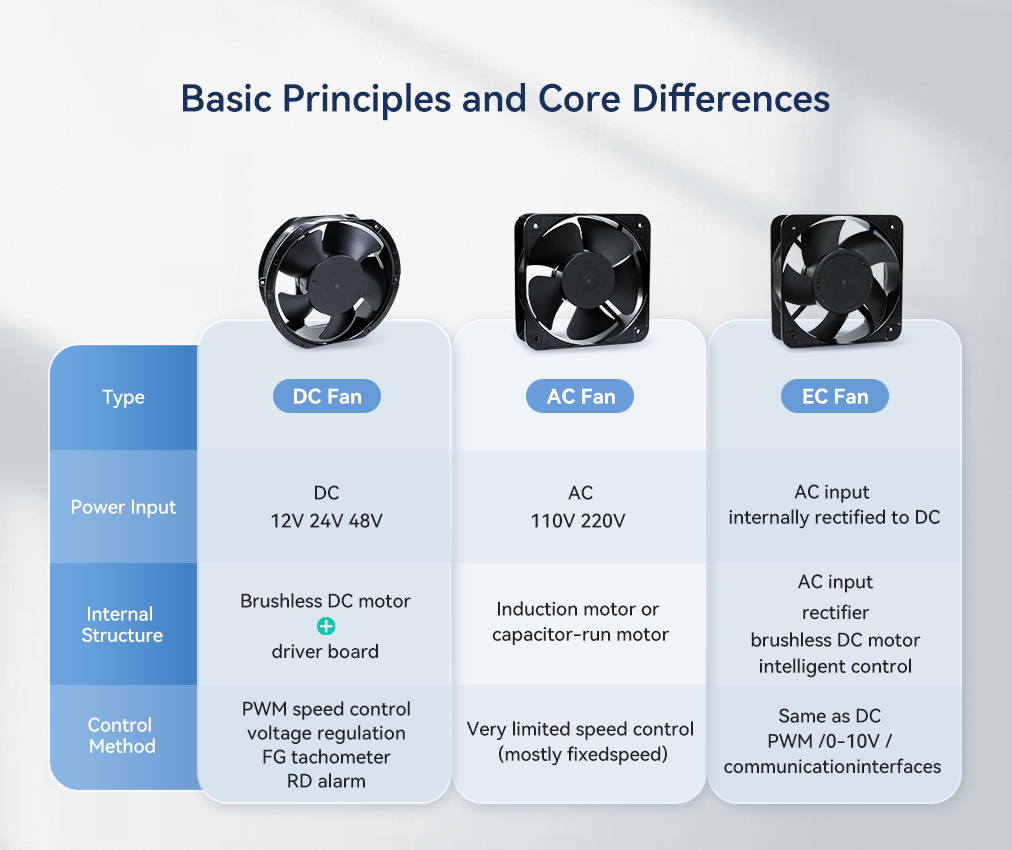
An EC fan is essentially "AC power supply + DC fan technology", combining the convenience of AC power with the efficiency and controllability of a DC motor.
II. Detailed Pros and Cons Comparison
|
Parameter |
DC Fan |
AC Fan |
EC Fan |
|
Energy Efficiency |
High (approx. 60-75%) |
Low (approx. 40-55%) |
Highest (approx. 75-85%) |
|
Speed Control |
Excellent (wide PWM range) |
Poor (essentially fixed speed) |
Excellent (PWM / 0-10V / MODBUS, etc.) |
|
Noise Performance |
Controllable, quiet at low speed |
Mains hum (50/60Hz) noticeable |
Same as DC, very quiet at low speed |
|
Startup Current |
Low |
High (2-3x rated current) |
Low (soft start) |
|
Power Supply Requirement |
Requires DC power supply or adapter |
Direct connection to mains |
Direct connection to mains |
|
Control Interfaces |
Rich (FG / RD / PWM / thermal control) |
Very few |
Rich (even RS485 communication) |
|
Typical Lifespan |
Dual ball bearing: 50,000-70,000h |
Sleeve bearing: 30,000-50,000h |
Same as DC (mainly dual ball bearing) |
|
Cost |
Medium |
Low (simple construction) |
High |
|
Size & Weight |
More compact for same airflow |
Larger and heavier for same airflow |
Same as DC, compact |
|
Typical Applications |
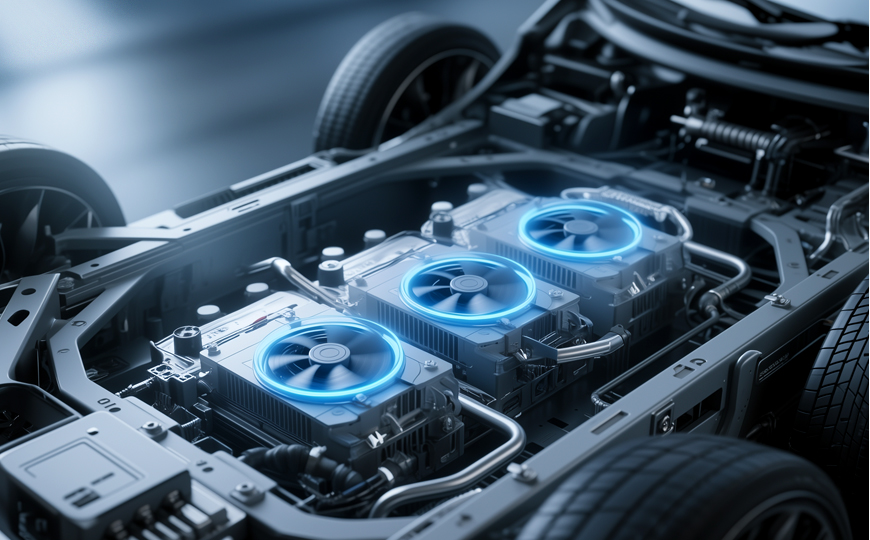
Electronics, servers, automotive, medical |
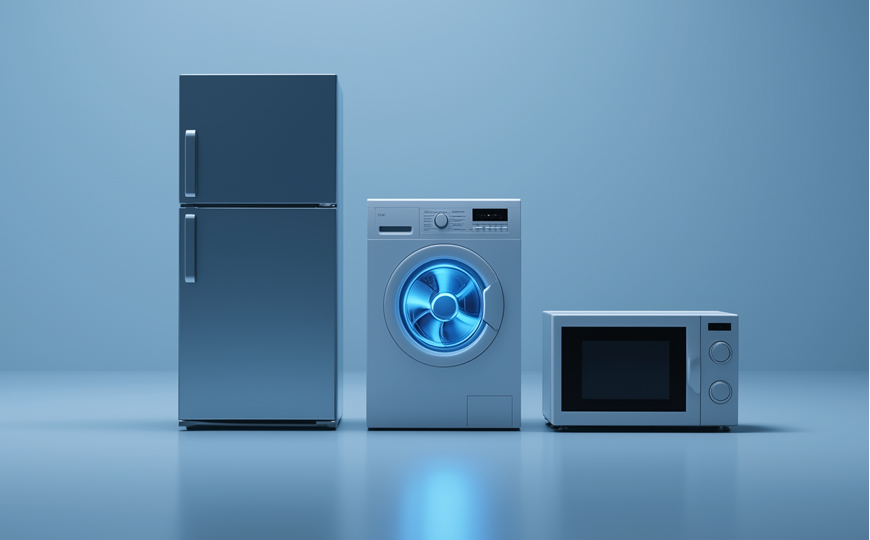
Industrial exhaust, HVAC, simple ventilation |
Data centers, precision AC, new energy, smart buildings |
III. Selection Reference Table (Ready for Direct Use in Project Decisions)
|
Project Requirement |
Recommended Fan Type |
Not Recommended |
Reason |
|
Wide-range PWM speed control needed |
DC or EC |
AC |
AC cannot achieve precise speed control |
|
Direct connection to mains, no extra power supply needed |
AC or EC |
DC |
DC requires a power adapter |
|
Energy efficiency is a key requirement (e.g., EU ERP) |
EC |
AC |
AC efficiency hardly meets standards |
|
Very tight budget |
AC |
EC |
AC has the lowest initial cost |
|
Low noise required and controllable |
DC or EC |
AC |
AC mains hum is hard to suppress |
|
Device runs on DC power (battery/vehicle) |
DC |
AC / EC |
Power mismatch |
|
Remote monitoring & communication needed (e.g., smart fan) |
EC |
AC / basic DC |
EC natively supports communication interfaces |
|
Ambient temperature continuously >60℃ |
DC (ball bearing) or EC |
AC (sleeve bearing) |
Bearing type and temperature rating are key |
|
Tight space installation |
DC |
AC |
AC motors are bulky |
IV. Common Misunderstandings
1. Misunderstanding: AC fans are always cheaper than DC fans
For small sizes (<80mm), AC fans are often more expensive due to their more complex construction.
2. Misunderstanding: EC fans are just "more expensive DC fans"
No. The core value of EC is AC direct input + DC efficiency + digital control, especially suitable for retrofitting existing AC systems without changing the power supply.
3. Misunderstanding: AC fans last longer
Lifespan depends on the bearing type, not the power type. AC fans commonly use sleeve bearings, so their lifespan may actually be shorter than that of dual-ball-bearing DC/EC fans.
4. Misunderstanding: DC fans cannot be used in high-humidity environments
They can, but the driver board needs a conformal coating. Same for EC fans.
V. Recommended Selection Process (Three Steps)
Step 1: Determine the power supply first
Existing DC system → DC Fan
Direct mains connection, no speed control needed → AC Fan
Mains connection but speed control or high efficiency required → EC Fan
Step 2: Determine the control method
PID closed-loop speed control, communication, alarm needed → EC Fan or advanced DC Fan
Simple on/off only → AC Fan or basic DC Fan
Step 3: Calculate life-cycle cost
Formula: Initial cost + energy cost × years + maintenance/replacement cost
In scenarios with continuous operation >2 years, EC fans often have the lowest total cost
VI. Corresponding Products from CoolCox Limited
We offer complete product lines of the three fan types to meet diverse needs from consumer electronics to industrial grades:
|
Type |
Representative Product Series |
Typical Applications |
|
DC Fans |
DC Axial / DC Blower / DC Frameless |
Servers, energy storage, medical, automotive |
|
AC Fans |
AC Axial Fan |
Industrial cabinets, ventilation, simple equipment |
|
EC Fans |
EC Axial Fan |
Data centers, precision AC, EV charging stations |
For project-specific selection advice (airflow, static pressure, noise, interface, environmental conditions) or a replacement comparison table, please contact our technical support team.